You start your Buick and the engine is slower to start than it was yesterday, and the dash lights flicker. You're wondering whether it can wait until your next Buick battery service.
Or the engine starts fine, but the battery light came on, or the Auto Stop that used to shut the engine off at red lights has stopped happening.
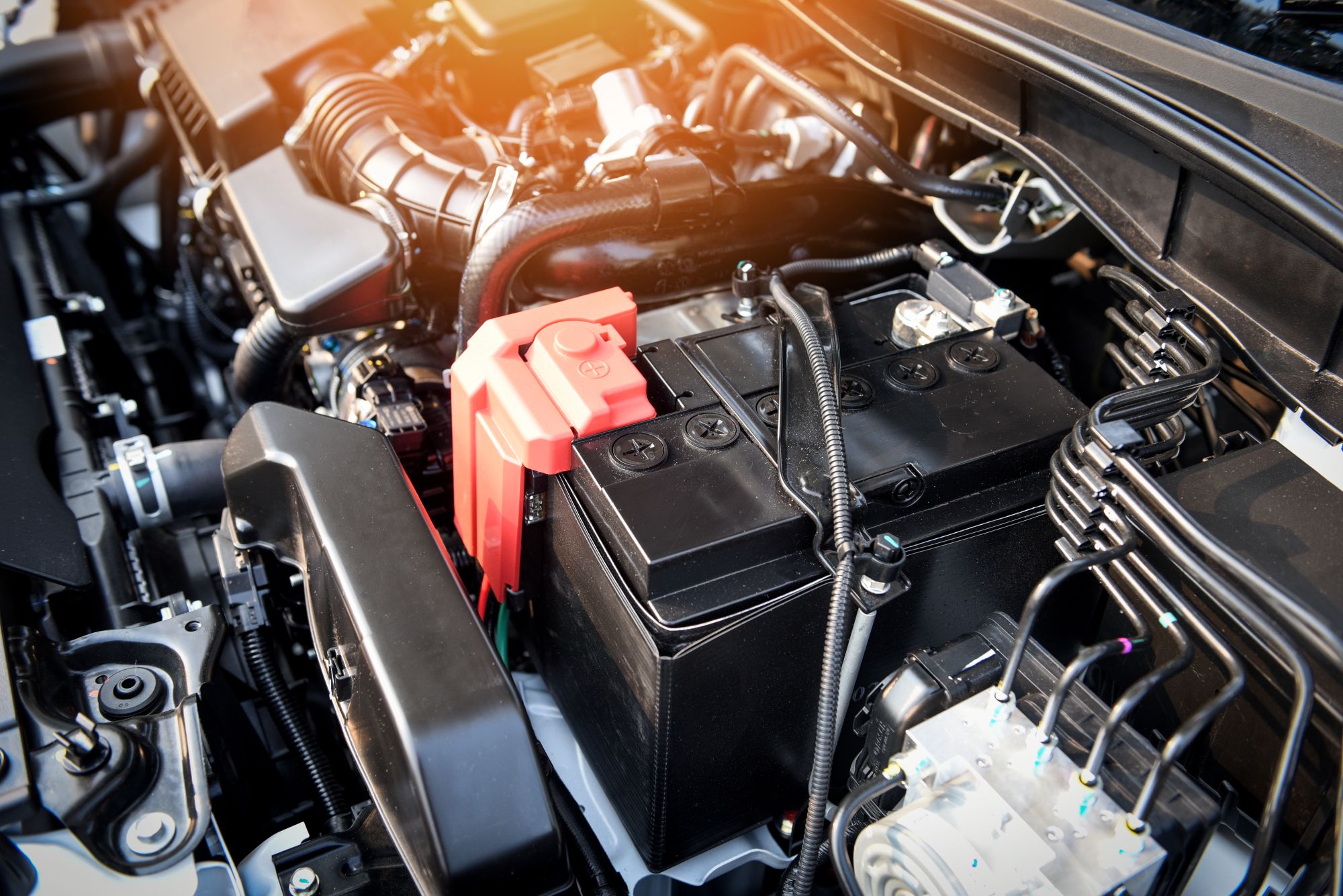
A slow or hard start, dim headlights, or a warning light are the usual signs of a weak 12-volt battery. A battery should be inspected and tested periodically: a technician tests its health and checks it for cracks, leaks, and corrosion.
The battery that came with your Buick is maintenance-free, so there's no cap to remove and no fluid to add.
The symptoms can come from the battery, the charging system (which recharges the battery and powers the lights and accessories while the engine runs), or the cables and connections, so the next step depends on what you notice.
| What you notice | What it can suggest | Best next step |
|---|---|---|
| A slow or hard start, or dim headlights | A weak battery, or a charging system that isn't keeping the battery charged. | Have the battery and the charging system tested. |
| Corrosion on the battery terminals | Chemicals and vapors escaping the battery, along with extreme heat, can corrode the terminals over time. | Clean the terminals, or schedule service if you'd rather not. |
| A leaking, swollen, or bloated battery case | A battery that likely needs to be replaced. | Skip any cleaning and bring the vehicle to our service department. |
| Auto Stop, if your Buick has it, stops happening at red lights | One reason is that the battery needs to charge. Other reasons include A/C or heat demand, outside temperature, and an open hood. | If it stops happening consistently, have the battery tested. |
| The charging system light stays on or comes on while you drive | A problem with the electrical system. | Have the vehicle serviced right away, and avoid long drives until it is. |
| The engine won't start and needs a jump | A dead battery, or a charging system that isn't recharging it. | Have both tested, because a jump start doesn't show which one failed. |
Only for a short distance, and only if you have to. If the charging system light, also called the battery light, stays on or comes on while you're driving, there may be a problem with the electrical system, and the vehicle needs to be serviced right away. Driving with the light on can drain the 12-volt battery.
If you do have to drive it, turn off features that use electrical power, such as the radio. If the vehicle stalls or loses power, don't keep driving it, and have it towed in for service. The light comes on briefly when you start the vehicle, and that's normal.
No. A jump start gets the engine running, but it doesn't show why the battery died. A weak battery and a charging system problem can look alike, so a technician has to test the battery, the charging system, and the connections to tell which one you have.
Jump-starting a Buick with Auto Stop is no different from jump-starting any other vehicle that isn't a hybrid or electric. Your owner's manual has the instructions for your vehicle.
If a jump starts the engine, have the battery and charging system tested before the next time the engine doesn't start.
Choose a battery with the cold cranking amps (CCA) rating your owner's manual lists. CCA is a rating for starting power in cold weather, and a higher rating than recommended won't start your Buick any faster, because the average engine takes no more than three seconds to start. Look for as much reserve capacity (RC) as you can get. RC is a rating for how long the battery can run the vehicle's electronics if the charging system stops working, and it matters more as vehicles carry more electronics.
After the battery loses power or is reconnected, the engine's electronic throttle needs to relearn its resting position. Turn the ignition on without starting the engine and leave it on for at least three minutes, turn the ignition off, then start the engine and let it run for at least 30 seconds.
Once a year, and any time the engine starts harder or slower than usual. Batteries on average last three to five years, depending on driving habits and climate.
Four things wear a battery out faster: accessories that aren't wired in properly, accessories left plugged in when the vehicle isn't in use, infrequent and short-distance driving, and storing the vehicle in freezing temperatures.
If you leave your Buick parked at Nashville International Airport for a week or more, it won't be driven at all in that time, so have the battery tested before you go. If you're leaving your Buick parked at home for the summer, such as after the spring semester at Middle Tennessee State University, you can remove the negative (-) cable or connect a trickle charger, and have the battery tested when you're back. Reconnecting the cable means the throttle needs to relearn its resting position, using the same steps as after a battery replacement.
We start with a detailed evaluation of the battery and the charging system to check that both are working and connected correctly. The test checks charge level, battery health, and charging system performance.
If the battery needs replacing, we install ACDelco batteries designed to meet General Motors standards for fit and durability. Our battery service at Chevrolet Buick GMC of Murfreesboro covers both the testing and the replacement.